





Strategic sourcing software delivers the greatest value when it operates as an integrated platform rather than an isolated point solution. A strategic sourcing platform keeps spend intelligence, supplier data, event decisions, award terms, and renewal triggers connected across the sourcing lifecycle, while disconnected tools create manual handoffs and data gaps at every transition. The real platform-versus-point-solution decision is therefore not about feature count. It is about whether intelligence can move from strategy to event, event to contract, and contract to renewal without being reconstructed by an analyst.
TL;DR
- Point solutions can perform individual tasks well, but disconnected sourcing software breaks at the handoffs between strategy, event execution, contract management, and renewal.
- Integrated sourcing management software preserves spend, supplier, risk, and compliance context throughout the workflow, reducing manual re-entry and coordination overhead.
- Built-in beats bolt-on: a native source-to-contract software architecture provides more reliable data continuity than integrations added after separate tools were purchased.
- Evaluate depth before breadth. Ask platforms integrating sourcing tools with ERP systems to demonstrate a complete strategy-to-award flow without exports, imports, or manual data re-entry.
How Do Procurement Functions End Up with a Collection of Point Solutions?
It happens in stages. An eSourcing tool is selected for event management. A supplier risk platform is added when a supply chain disruption creates urgency. A contract management system arrives with a compliance initiative. A spend analytics tool is purchased after a CFO requests visibility into category performance.
Each decision was rational at the time. The result is a landscape that maps separate decisions rather than a system. The eSourcing tool does not read from the contract management system. The spend analytics output is not connected to the RFP authoring workflow.
The Hackett Group’s 2025 Digital World Class® research found that top-performing procurement organizations operate at 19% lower cost as a percentage of spend and with 31% fewer full-time employees than their peers. Our read: part of that advantage is not better processes. It is fewer manual bridges between disconnected tools.†
What Is the Real Cost of Managing Sourcing Across Disconnected Tools?
The visible cost is coordination: the hours an analyst spends downloading a spend report, enriching it from a third source, and uploading it to the sourcing tool. Every analyst in every organization running eSourcing on a disconnected intelligence environment performs some version of this.
The less visible cost is quality: what is lost in each transfer. Supplier qualification data held in a risk platform does not surface in the invitation list. Spend analysis context does not carry into the RFP. The event runs without the intelligence because the intelligence lives somewhere the event tool cannot read.
World Commerce & Contracting research (2025) found that organizations lose an average of 11% of contract value between what was negotiated at award and what was delivered during execution. Our read: that leakage grows when contracts are managed in systems disconnected from the sourcing event that produced them.‡
What Is the Difference Between a Platform and a Point Solution in Sourcing?
The distinction is not about the number of modules or the breadth of marketing claims. It is about where the data lives and how it flows.
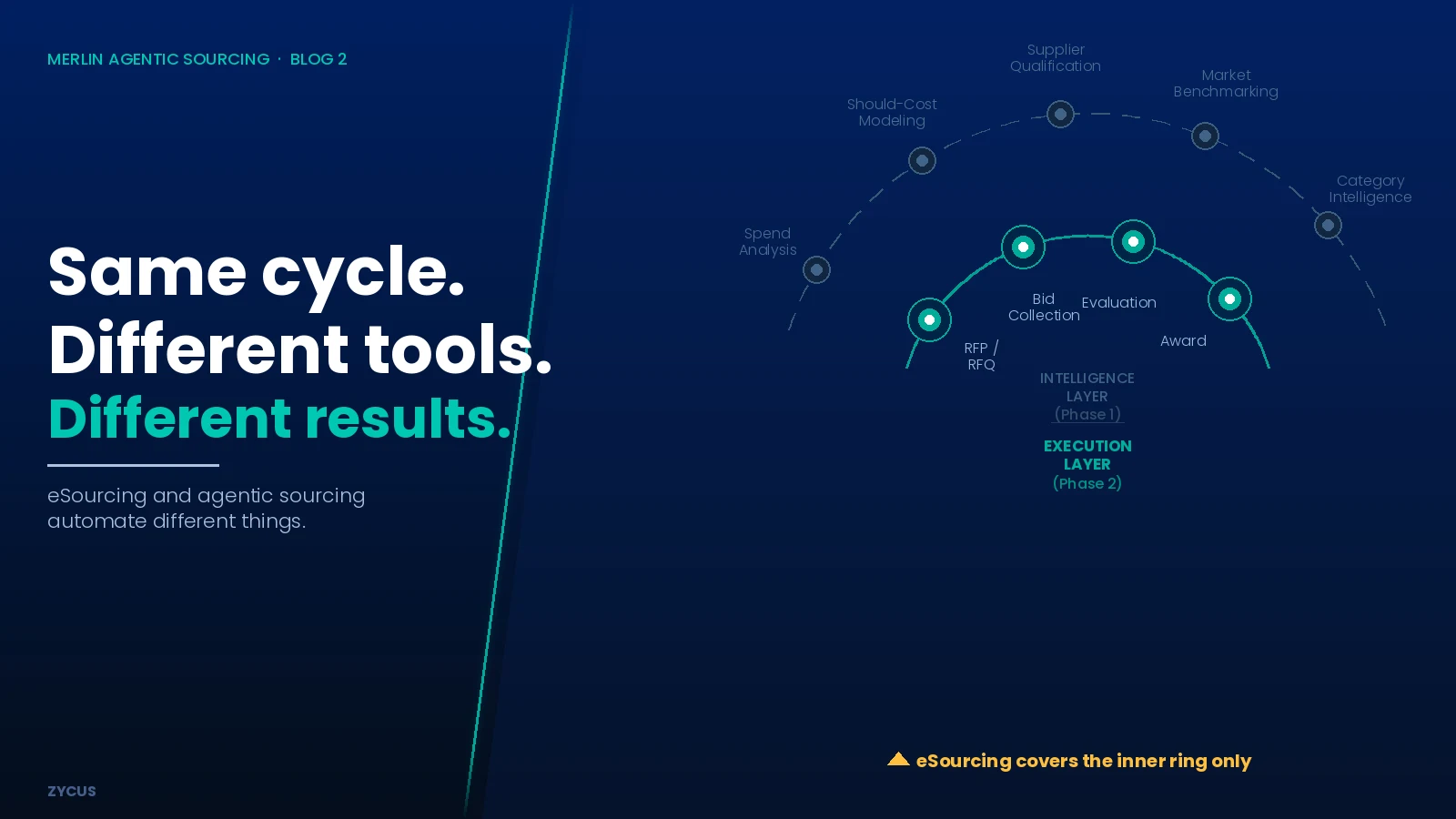
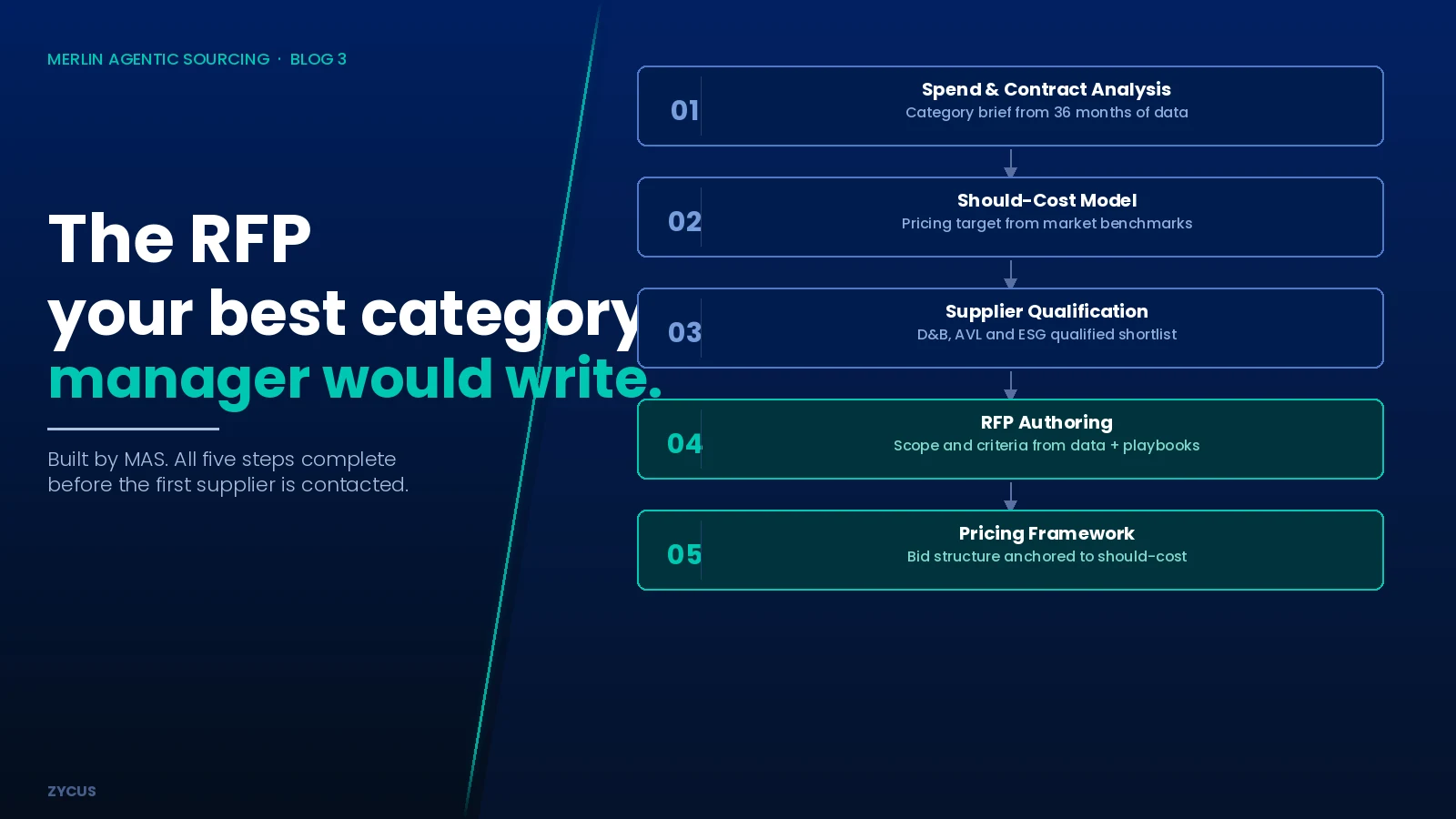
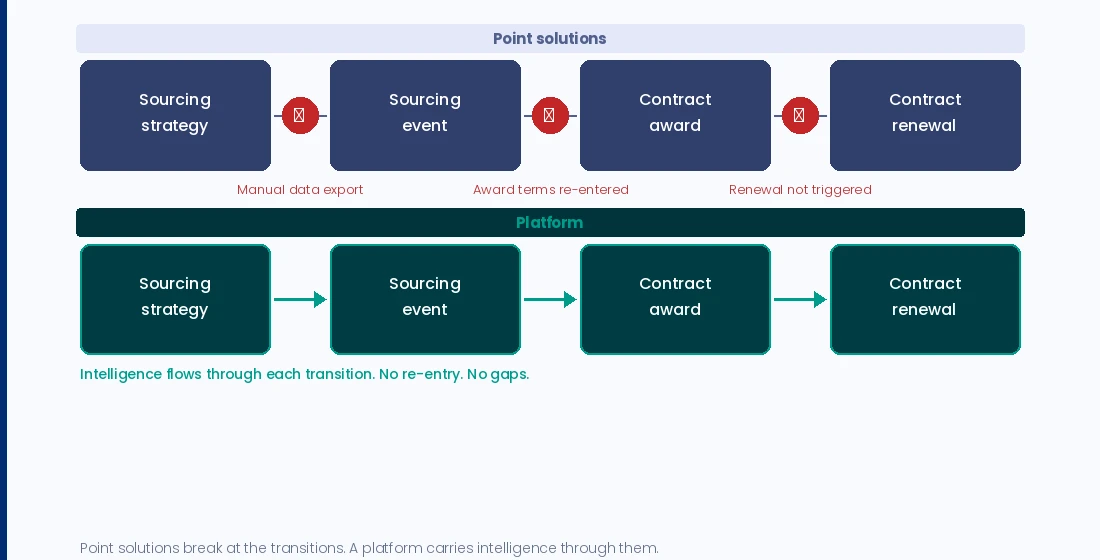
In a point solution architecture, data moves between tools through exports and integrations built after each system was purchased; when a connection breaks, an analyst closes the gap. In a platform architecture, data flows between functions because they were designed to share it from the start. The spend analysis that produces the category brief feeds directly into the RFP authoring step. The supplier qualification results are available in the invitation list. The contract award terms flow into contract management without re-entry. The intelligence built in Phase 1 is visible in Phase 2 because both phases run on the same data layer.
Built-in beats bolt-on. The integration designed into a platform from the start produces outcomes that cannot be replicated by connecting independently designed tools after the fact.
Where Do Point Solutions Break Down in Strategic Sourcing?
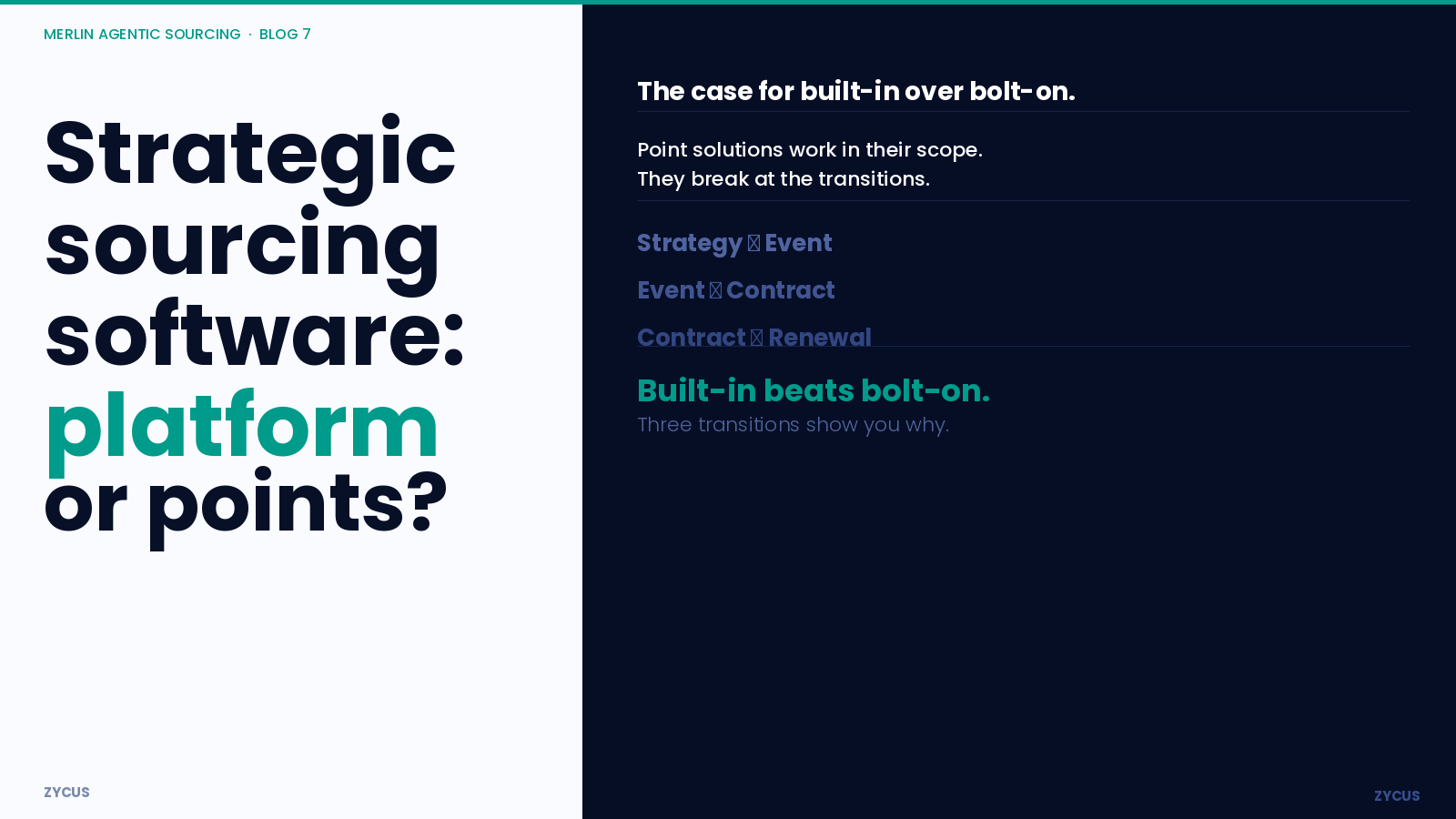
Point solutions break at the transitions. The transition from strategy to sourcing event is where category intelligence, assembled manually or built in a separate tool, must be translated into an RFP scope in another system. The transition from sourcing event to contract is where award terms documented in the sourcing tool must be re-entered into contract management. The transition from contract to renewal is where the contract management system must trigger a new sourcing event, a handoff that most disconnected architectures cannot make automatically.
These transitions are where tail spend leaks outside the procurement process, where supplier risk signals fail to surface in sourcing events, and where single-supplier renewals happen not because the category manager chose them but because the contract expired before sourcing could begin.
APQC benchmarking data finds the cost to process a single purchase order ranges from around $14 for automated, top-performing organizations to over $54 for those relying on manual processes. In a disconnected landscape, every handoff between systems adds coordination overhead that compounds that gap.
Read More About Best Strategic Sourcing & eSourcing Software in 2026
What Does Built-In Integration Change?
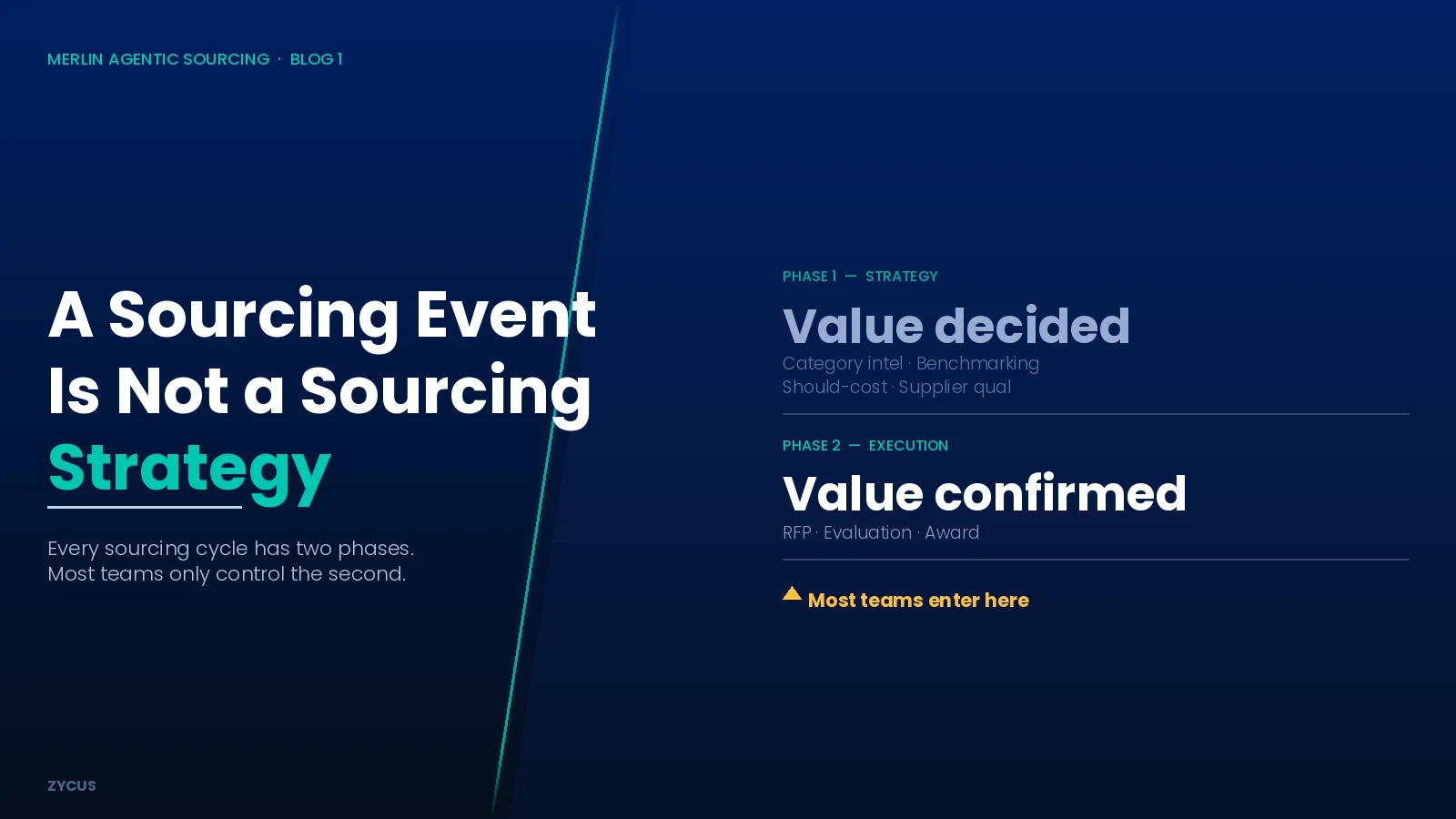
Merlin Agentic Sourcing (MAS) was built as a native module of the Merlin Agentic Platform, not integrated into it after the fact. The intelligence MAS assembles in Phase 1 flows into Phase 2 because both phases run on the same data layer.
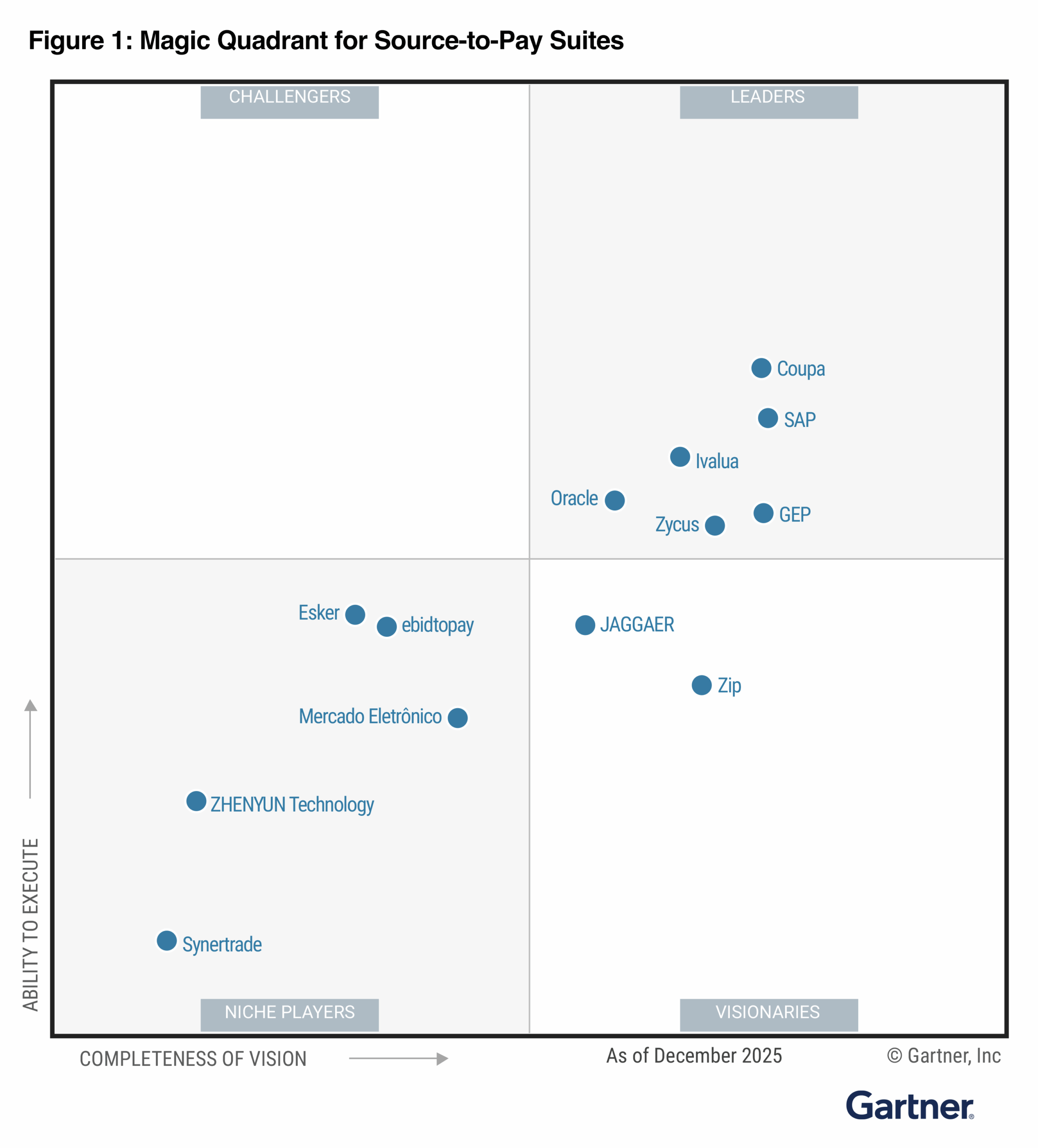
Zycus was recognized as a Leader in the Gartner® Magic Quadrant™ for Source-to-Pay Suites, January 2026. The Merlin Agentic Platform connects Merlin Intake, MAS, and ANA in a single governed architecture, each working from the same supplier data, category spend history, and compliance rules.
MAS is designed to cut sourcing cycle time from strategy to award by up to 60%. That compression is partly possible because Phase 2 does not need to reconstruct what Phase 1 already built.
How Do You Evaluate Platform Depth vs. Breadth?
A platform can be broad without being deep. Depth means the core function, strategic sourcing, runs from strategy to award within a single data environment without gaps. Breadth means coverage across many procurement activities, which is secondary to depth if the core function is shallow.
The depth question: does the intelligence built in the strategy phase flow directly into the event phase without a manual export or re-entry? If not, the platform is not truly integrated at the sourcing level regardless of how many modules it offers.
The breadth question follows: once a sourcing event produces an award, does the platform connect that award to the contract management workflow, the supplier qualification record, and the AP reconciliation? Depth of the sourcing-to-award flow comes first; breadth of the source-to-pay integration follows.
What Does the Decision Framework Look Like for a Fragmented Environment?
Three questions frame the decision. Where are the data gaps that cost the most today? If the highest coordination cost sits between spend intelligence and the sourcing event, platform integration is the first criterion. What is the integration capacity? A fragmented environment with strong integration capability may connect point solutions adequately; one without that capacity needs the connections built into the platform. What is the team’s first priority? Covering more strategic categories, closing tail spend, or reducing contract leakage all lead to different starting points. The platform’s value is that starting anywhere builds toward the same governed architecture. A collection of point solutions starts over with each new requirement.
† Hackett 2025 Digital World Class: 19% lower cost and 31% fewer FTEs. Note these are different findings from the 2.03x savings figure cited in Blog 1 and the 2.6X ROI figure cited in Blog 5, all from the same press release page.
See how the Merlin Agentic Platform connects sourcing, supplier management, and contract governance in one governed flow. One session. Both agents. Published by Zycus. Download the MAS datasheet for the platform integration specification.
Merlin Agentic Sourcing is part of the Merlin Agentic Platform, Zycus’s Intake-to-Outcomes architecture for governed, multi-agent procurement.
Ready to see how the right software fits your procurement workflow? Request a Demo today to explore a targeted point solution right for your team.
Frequently Asked Questions
Q1. What is the practical difference between a platform and a point solution for strategic sourcing?
A platform runs the full sourcing sequence from strategy to event to award to contract within a single data environment. A point solution handles one part of that sequence and requires integration with other tools for the rest. The practical difference shows up at the transitions: strategy to event, event to contract, and contract to renewal. In a platform, data flows through those transitions automatically. In a point solution architecture, an analyst closes each gap manually.
Q2. Why does built-in beats bolt-on matter in a multi-ERP environment?
In a multi-ERP environment, the integration work required to connect point solutions multiplies with each system added. A platform designed to operate across ERP environments carries that integration in its architecture rather than in a growing maintenance backlog. Bolt-on integrations between independently designed tools break when either tool updates, require separate maintenance, and create data gaps that analysts learn to work around rather than close.
Q3. Can MAS work in a fragmented technology environment without replacing existing systems?
Yes. MAS is designed as an upstream intelligence layer and structured event execution tool, not a replacement for every system the organization currently uses. It connects to existing data environments for spend analysis, runs the intelligence chain and event execution natively, and produces an award recommendation that integrates with existing contract management workflows. The entry point is a single category, not a full platform migration.
Q4. How do you evaluate whether a platform’s integration is genuinely built-in or bolt-on?
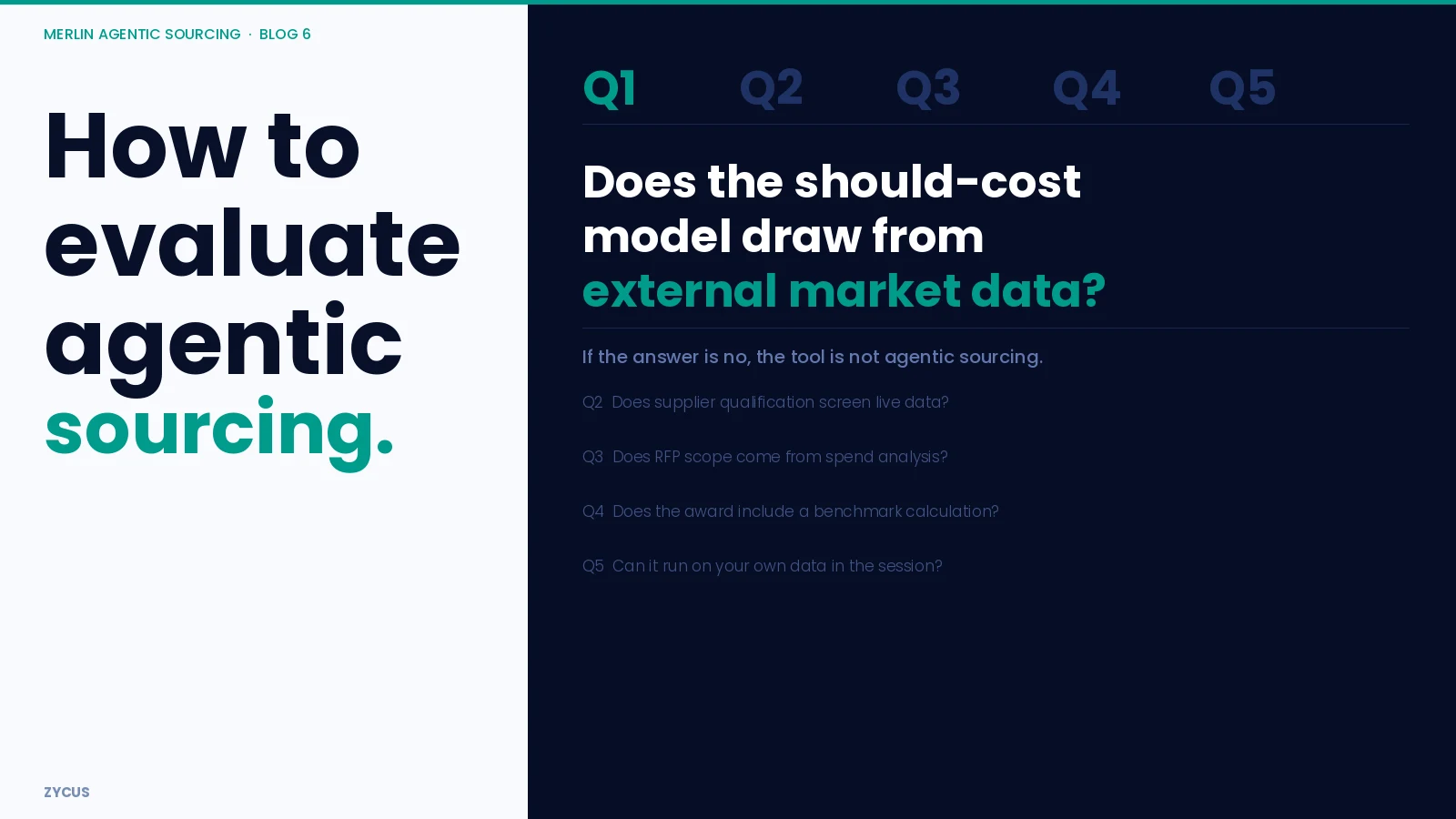
Ask the vendor to demonstrate a complete sourcing cycle from spend analysis to award modeling without any export, import, or re-entry of data between steps. If the demonstration requires switching between applications, uploading a file, or re-entering category information at any point, the integration between those functions is bolt-on rather than built-in.
Q5. What is the right first step for an organization with a fragmented procurement technology landscape?
Map the data transitions that currently require manual intervention: where does an analyst export from one system and import to another? Where does data need re-entry because two tools do not share it? The points of highest friction are where a platform delivers the greatest immediate value. Choose the pilot category where that transition friction is highest and where data quality is sufficient to demonstrate a clean intelligence-to-event flow.
Related Reads