





Ask any CFO what frustrates them most about procurement, and the answer is rarely about savings. It’s about speed. Forrester just put a number on it: 67% of Chief Procurement Officers themselves admit that speed of execution is where procurement most falls short of enterprise expectations.
That’s not a perception problem. That’s CPOs looking at their own function and saying it isn’t fast enough. The question is why — and what the high-performing CPOs are doing differently.
Speed is Now the #1 Performance Gap in Procurement
Forrester’s Q1 2026 Procurement Leaders And AI Survey, commissioned by Zycus, asked 147 CPOs to rank where procurement falls short of what the business needs. The results were unambiguous:
- 67% — Speed of execution
- 52% — Strategic alignment with corporate business objectives
- 51% — Balancing cost savings vs. enabling business growth
- 48% — Stakeholder experience
- 46% — Risk management
Speed didn’t just lead the list — it lapped it. By 15 points. And it’s not because procurement teams are lazy or under-resourced. It’s because the architecture of most procurement functions was designed for a different decade.
Why Procurement Got Slow: Three Root Causes
1. Fragmented Technology Landscapes
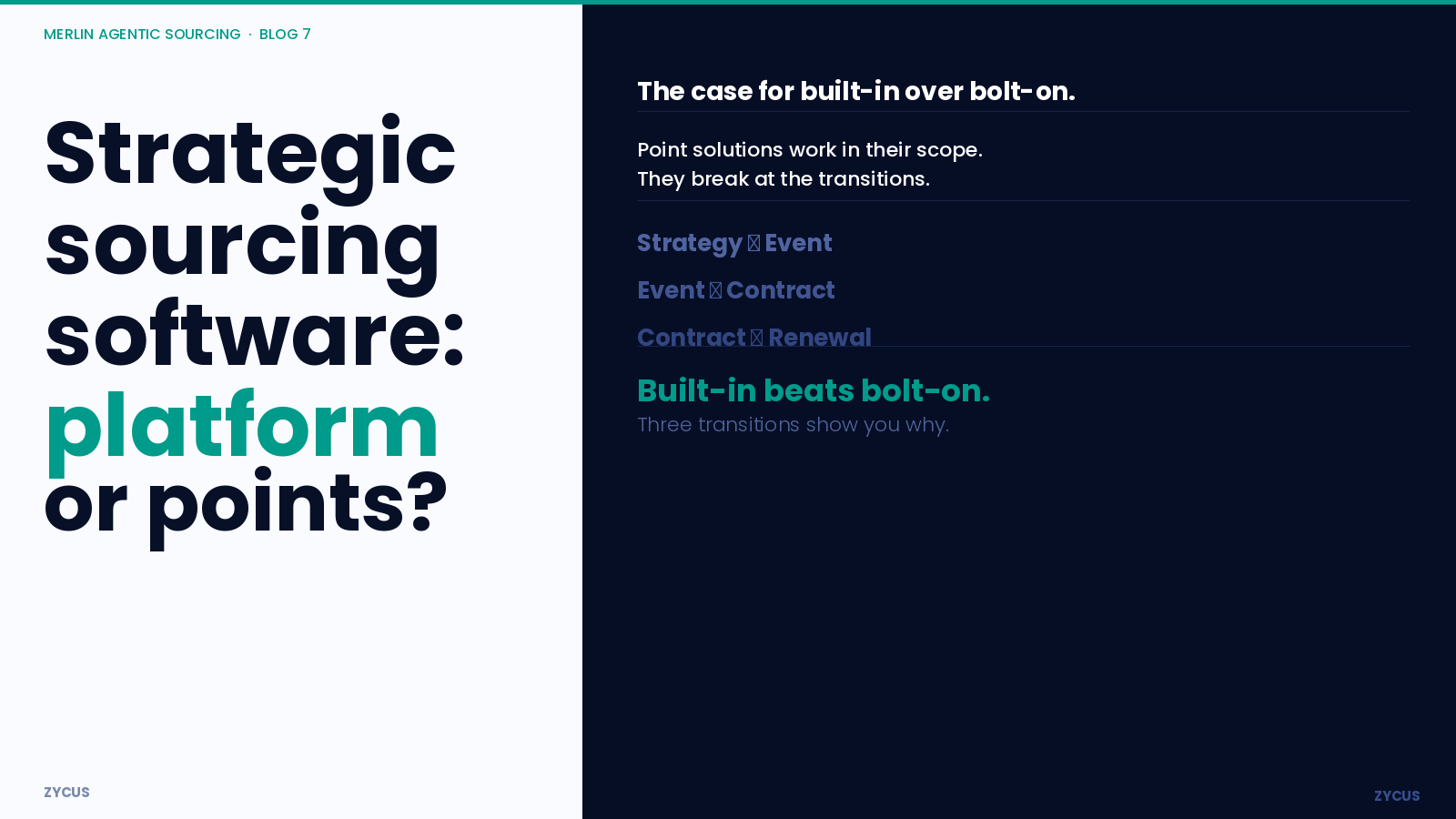
68% of new CPOs cite fragmented or outdated technology as their top operational challenge. The typical procurement stack today is a stitched-together collection of point solutions: one tool for sourcing, another for contracts, a third for supplier management, a fourth for accounts payable, and an ERP that doesn’t quite trust any of them.
Every handoff between systems is a wait state. A supplier onboarding that should take three days takes three weeks because the data has to be re-entered four times, validated by three approvers in different tools, and reconciled at the end.
2. Data Quality Tax
58% of CPOs cite poor data quality as a top challenge. This is the silent killer. When category managers can’t trust the spend data, they spend half their cycle time validating numbers instead of negotiating. When risk teams can’t trust supplier records, every renewal becomes a forensic exercise. Speed is impossible when half the work is data archaeology — which is why AI-powered spend analysis with auto-classification and continuous enrichment is now table stakes for a CPO trying to compress cycle time.
3. Operating Models Built for Compliance, Not Speed
Most procurement functions still operate on workflows designed when the priority was control and audit trail — not user experience or velocity. The result is layered approvals, intake processes that route requests through five different inboxes, and contract reviews that move at the speed of email threads.
One CPO in transportation and logistics summarized it bluntly when interviewed by Forrester: when she arrived, the team was doing a lot with very little — committed people but fragmented data, legacy tech, and manual procure-to-pay processes that meant they were firefighting rather than shaping supplier strategy.
What High-Performing CPOs Are Doing About It
The CPOs who are closing the speed gap are not asking their teams to work harder. They’re rebuilding the system. Forrester’s data shows three moves separating leaders from laggards.
Move 1: Fix the Front Door
Most procurement cycle time is lost before sourcing even starts — in the messy, email-driven intake process where requesters chase approvals, fill in the wrong forms, or buy off-contract because the official process is too slow. Fixing the front door is the highest-leverage speed move available. Merlin Intake works exactly here: requesters type a need in Microsoft Teams or Slack, and the AI guides the request, enforces policy compliance, and routes it to the right sourcing flow — with no forms and no email chaos. The compounding effect on enterprise cycle time is significant.
Move 2: Deploy Agentic AI in High-Volume Processes
Agentic AI is not a future story in procurement. It’s already deployed at scale:
- 48% of organizations use agentic AI in spend analysis
- 39% use it in accounts payable automation
- 38% use it in procure-to-pay processes
The pattern: agentic AI works best where volume is high, exceptions are repeatable, and the cost of a mistake is bounded. Spend classification across millions of transactions. AP exception handling at scale — the use case Merlin AP Automation addresses with template-less invoice extraction and intent recognition. PO-to-invoice matching with intelligent reconciliation. These are the workflows where AI compresses days of work into minutes.
But — and this is the part most coverage misses — only 40% of CPOs feel confident in their ability to operationalize AI across procurement workflows, and just 29% feel confident in their team’s readiness to work with AI. Speed gains require both the technology and the operating model.
Move 3: Automate the Negotiation You’re Currently Skipping
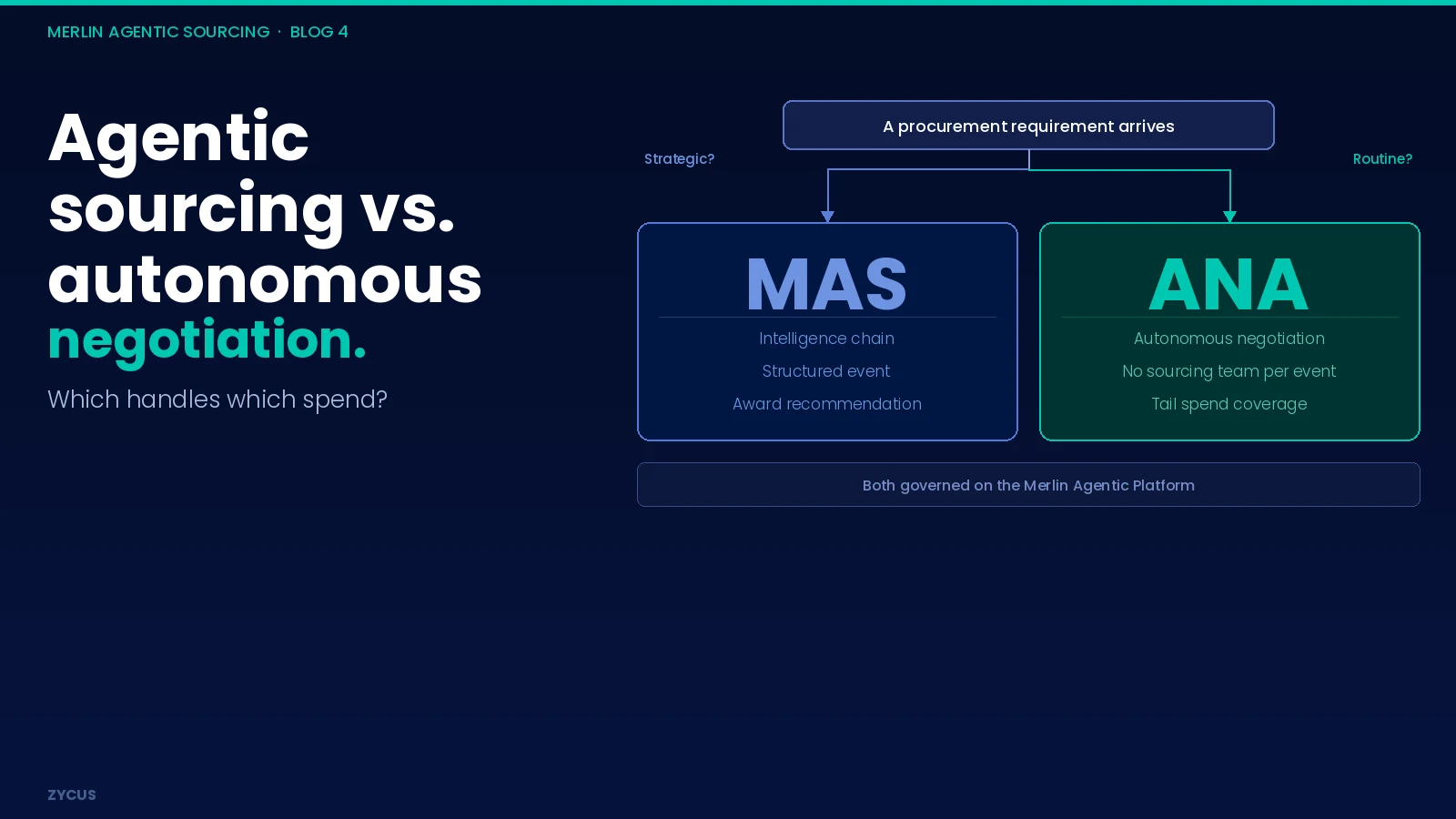
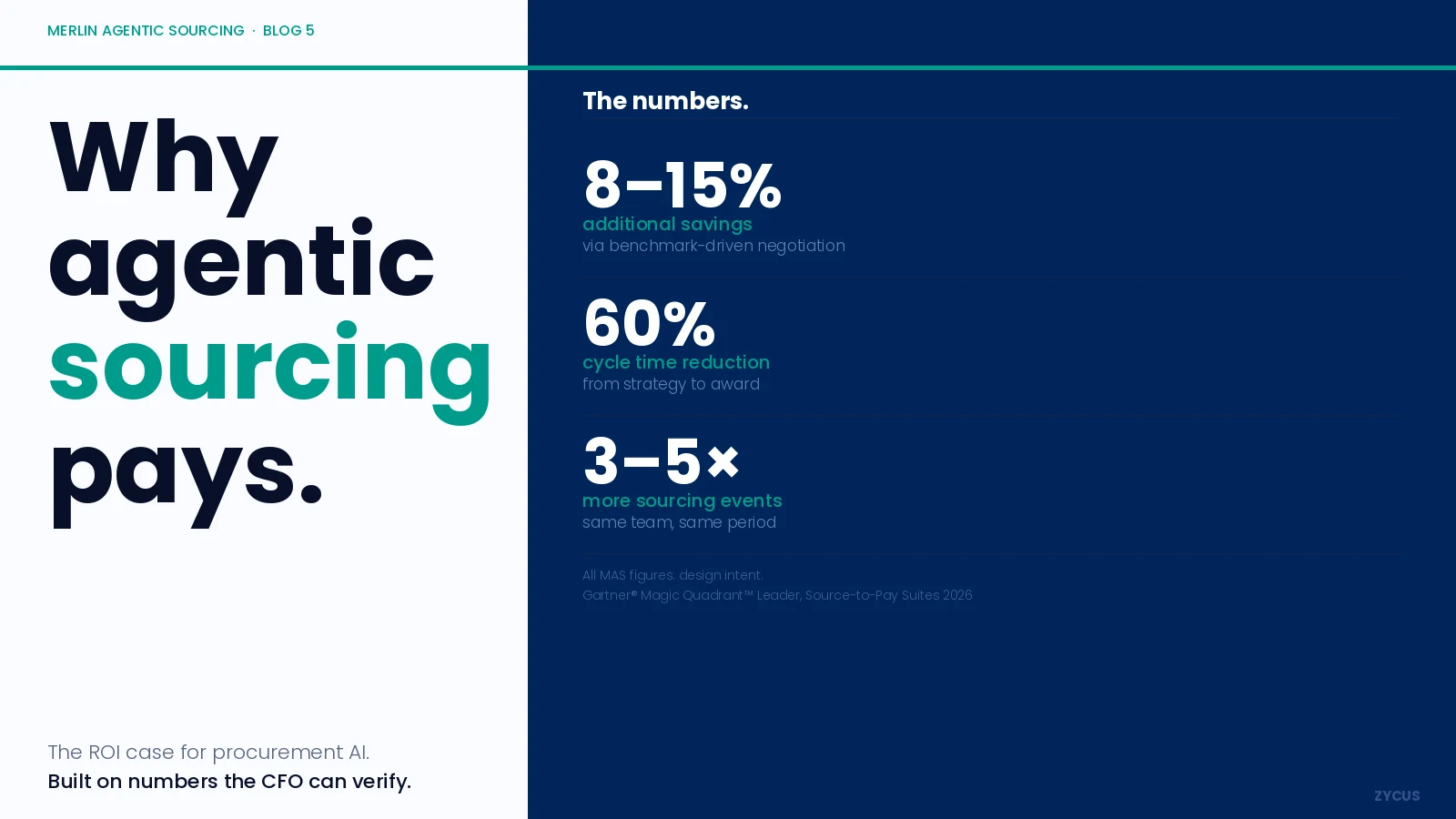
Tail spend is where speed and savings collide most painfully. For every $100M in tail spend, enterprises lose $2-5M to fragmented buying and unmanaged negotiations. Autonomous Negotiation Agents (ANA) close that gap by running tail-spend negotiations in parallel — across price and non-price terms like payment, warranty, and discounts — with no manual touch. CPOs deploying ANA report 250% higher net benefits and 70% faster cycle times on previously unmanaged categories.
Move 4: Set AI Decision Rights Explicitly
53% of CPOs are now setting AI decision rights — a clear answer to which decisions AI can make autonomously, which require human-in-the-loop checkpoints, and which stay fully manual. This is what allows speed at scale, and it’s exactly the design principle behind the Merlin Agentic AI Platform, which lets admins configure agent autonomy, thresholds, and oversight rules without heavy IT dependency.
The KPIs That Actually Track Speed
Most procurement scorecards are still anchored on savings. The CPOs winning the speed argument are adding metrics the CFO actually cares about:
- Cycle time reduction (53% of CPOs track this) — from intake to PO, from RFP to award, from contract draft to signature
- Reduction in manual touches per procurement request (53%) — the proxy metric for friction
- Workforce productivity (54%) — output per FTE, not just hours worked
These are the numbers that translate “procurement is faster” into “procurement is helping the business move faster” — which is the only version the C-suite cares about.
The 90-Day Speed Reset
For a new CPO walking into a slow function, the temptation is to launch a multi-year transformation program. The data suggests something more pragmatic: a 90-day reset focused on three things.
- Diagnose where time is actually lost. Map cycle times for the top three procurement workflows. The bottleneck is rarely where leadership thinks it is.
- Fix the foundation before adding intelligence. Get the data right, define the process, then let AI amplify it. Reverse the order and you’ll just automate dysfunction.
- Pick one workflow and ship a visible win by day 90. 61% of new CPOs prioritize early efficiency or cost wins for exactly this reason — fixing intake with Merlin Intake or running ANA on a single tail-spend category typically delivers a measurable, board-presentable result inside the first quarter.
Get the Full 90-Day Framework
This article covers the speed problem. The full Forrester Opportunity Snapshot — The New CPO Reality: First 90 Days, commissioned by Zycus — covers the complete day-by-day playbook for new CPOs: how to diagnose, set strategy, and execute, with benchmarks from 261 procurement leaders.
→ Download the full Forrester study
Continue Reading
Previous in this series: The First 90 Days as a New CPO: A 2026 Playbook (Backed by Forrester Data)
Next in this series: Agentic AI in Procurement: What 261 CPOs Just Told Forrester
FAQs
Q1: Why is procurement so slow?
Procurement is slow because of fragmented technology (cited by 68% of new CPOs), poor data quality (58%), disconnected AI initiatives (48%), and operating models built for transactional control rather than speed. The cumulative effect is that even simple processes have multiple wait states between systems.
Q2: What percentage of CPOs say procurement is too slow?
67% of CPOs surveyed by Forrester in 2026 said speed of execution is the top area where procurement falls short of enterprise expectations — ahead of strategic alignment, balancing cost savings with growth, stakeholder experience, and risk management.
Q3: How do you make procurement faster?
Fix the front door with AI-guided intake, deploy agentic AI in high-volume processes like spend analysis and AP automation, automate tail-spend negotiations with autonomous agents, and set explicit AI decision rights so automation doesn’t stall at every approval boundary.
Q4: What is the best metric to track procurement speed?
The three most-tracked speed metrics are cycle time reduction (53% of CPOs), reduction in manual touches per procurement request (53%), and workforce productivity (54%). Together, they capture both elapsed time and process friction.
Related Reads:
- You Surely Can’t Beat These Four Traits of a Successful CPO
- The CPO’s First 90 Days in the AI Era | Forrester x Zycus
- CPO Rising 2025: Navigating Global Uncertainty & Unlocking an AI- Driven Future
- The CPO’s Playbook: 5 Strategic Nuances for Proactive Procurement Excellence
- CPO Game Changer Series Volume 2: New and Improved Technology