






TL;DR
- PSS Bangkok 2026 confirmed that Thailand’s procurement leaders have shifted from exploring AI to rapidly deploying autonomous agents.
- With 62% AI adoption, Thailand is emerging as APAC’s proving ground for AI-native, autonomous procurement platforms.
- Procurement’s role now spans cost optimization, compliance, risk, ESG, and decision velocity, stretching existing team capacity.
- Agentic AI platforms designed for autonomy enable teams to scale capability without increasing headcount.
- Organizations using Merlin and Autonomous Negotiation Agents (ANA) report 2–5% tail spend savings, 70% faster intake processing, and up to 35% supplier risk reduction.
- The key takeaway: APAC’s procurement transformation is already happening, and speed of adoption will separate leaders from laggards.
Why this Event Mattered
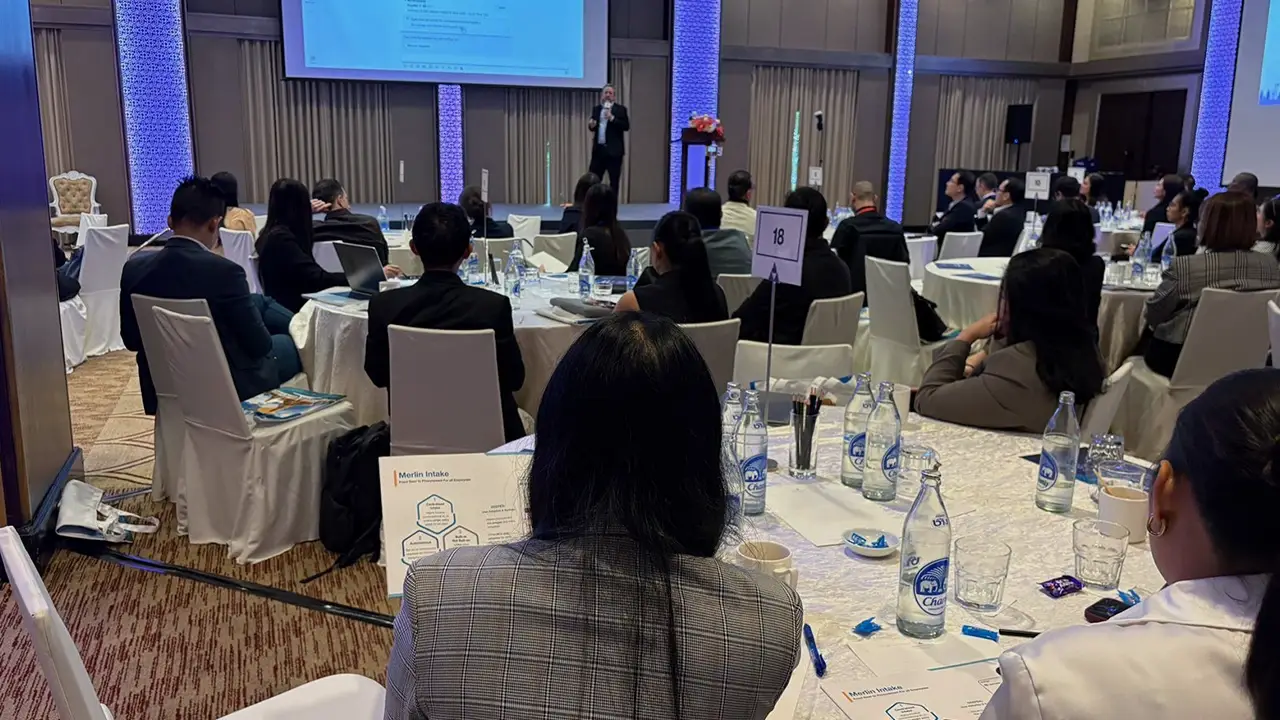
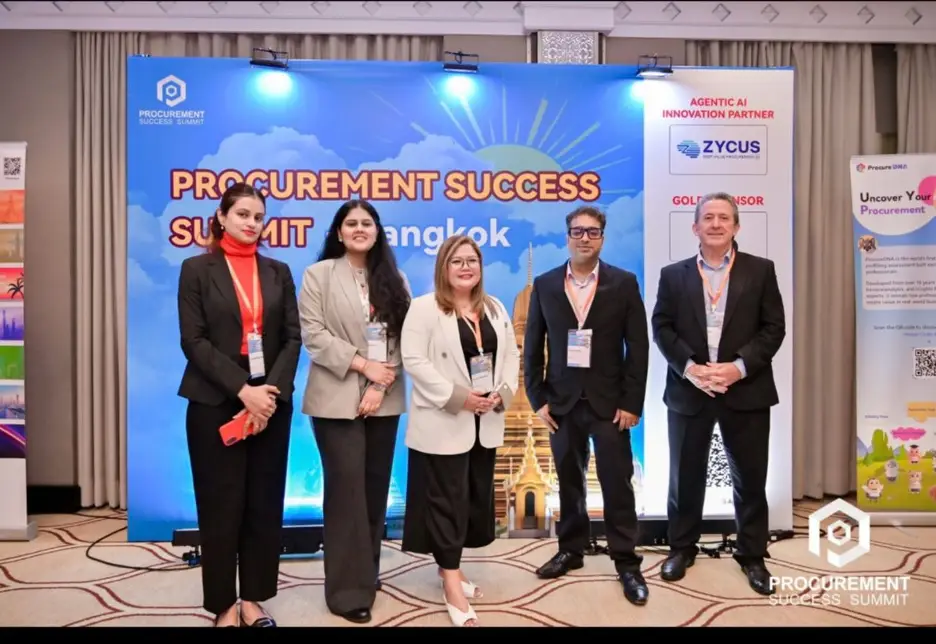
When we returned to Bangkok for the second consecutive year to deliver the keynote at (PSS)Procurement and Supply Chain Summit, it wasn’t just about maintaining momentum, it was about recognizing a fundamental shift happening across Asia-Pacific’s procurement landscape.
Thailand has emerged as more than a regional logistics hub. With 62% of workers integrating AI into their professional lives, the highest rate in Southeast Asia, Thailand is becoming APAC’s testing ground for next-generation procurement intelligence, where supply chain complexity meets digital readiness.
What I witnessed at PSS Bangkok wasn’t theoretical interest. It was urgent conversations about breaking down operational silos, managing compliance requirements, and deploying autonomous agents to reclaim time for strategic work. The procurement leaders I met didn’t ask if AI would transform their operations—they asked how fast they could deploy it to solve problems costing them millions today.
The Industry Shift: Procurement’s Strategic Elevation
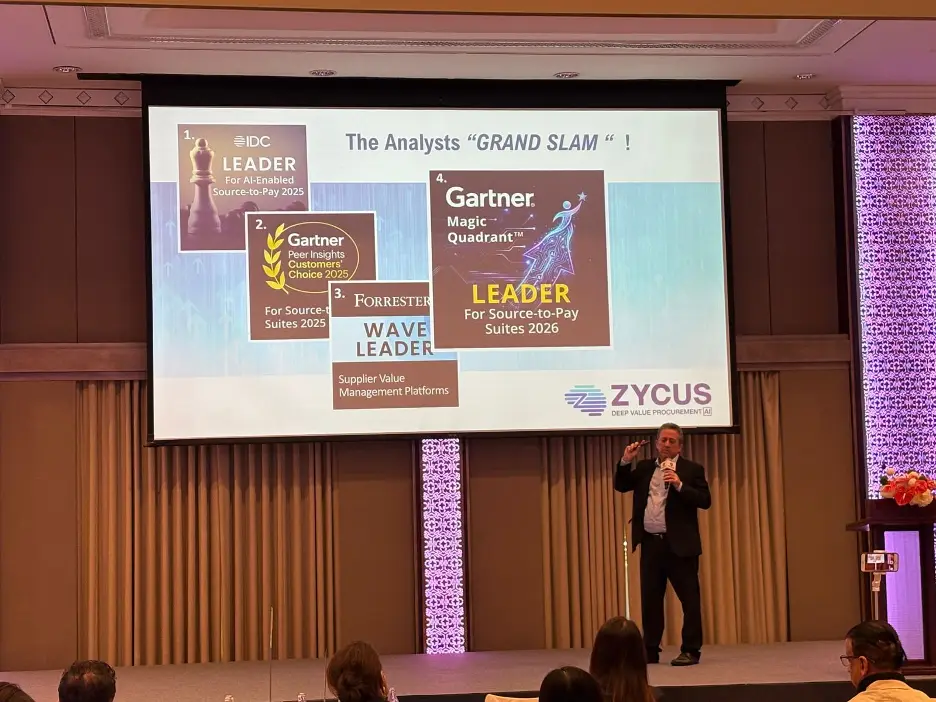
Our keynote presentation by Carl Kimball, Regional Head – APAC & Japan, centered his thesis that resonated with the 200+ procurement leaders in attendance: Procurement’s traditional value proposition—cost reduction, is necessary but insufficient for 2026.
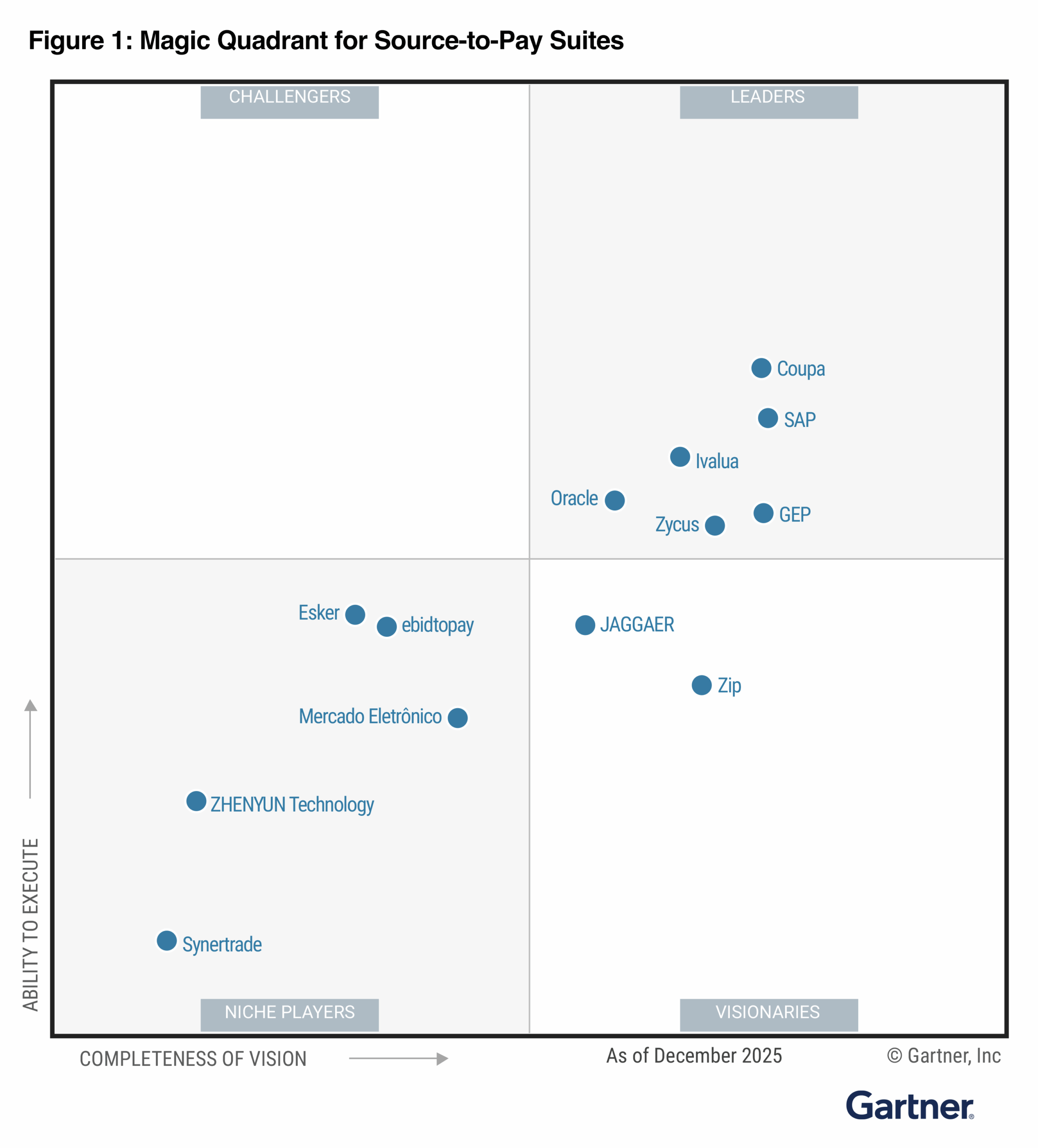
When three major analyst firms independently recognize the same platform as a leader, it signals something deeper than marketing; it reveals architectural alignment with where procurement is headed.
What is a Leadership Framework – and Why it Matters to the CPO
Leadership frameworks such as the Gartner Magic Quadrant for Source-to-Pay, Forrester Wave for Supplier Value Management (SVM), and IDC MarketScape for S2P are structured evaluation models designed to assess technology vendors across two broad dimensions: execution capability and future vision.
Across APAC, 47% of procurement leaders report that visibility is no longer their primary challenge; decision velocity is. They can see problems. What they need is intelligence and autonomy to solve them without waiting for manual approval or executive escalations.
The Expanded Mandate
Procurement leaders at PSS Bangkok aren’t managing the same function their predecessors oversaw. Their mandates now include:
- Supplier Financial Health Monitoring: Predicting bankruptcy risks before production disruptions
- Geopolitical Risk Assessment: Evaluating how trade policy shifts affect supplier networks
- ESG and Regulatory Compliance: Ensuring suppliers meet evolving standards across jurisdictions
- Strategic Cost Intelligence: Dynamic optimization adapting to real-time market conditions
- Demand Intake Orchestration: Managing stakeholder requests without creating bottlenecks
The challenge dominating post-keynote discussions: how do you execute these responsibilities with existing team capacity?
The answer isn’t hiring more people. It’s deploying intelligent agents that handle routine complexity autonomously.
Three Conversations That Defined PSS Bangkok 2026
Conversation 1: Breaking Down Use Cases to Manage Costs and Compliance
A procurement director from one of Thailand’s largest manufacturing conglomerates approached immediately after the keynote: “We’re managing 15,000+ suppliers across six countries. Our compliance requirements just doubled with new ESG regulations. Our team hasn’t. We need specific use cases where AI delivers measurable value.”
What I Showed Him:
Autonomous Contract Intelligence: Merlin’s AI agents continuously scan supplier contracts to identify:
- Pricing terms misaligned with current markets (cost recovery)
- Compliance clauses needing regulatory updates (risk mitigation)
- Renewal dates approaching within 90 days (proactive renegotiation)
Supplier Risk Scoring: Merlin’s predictive analytics reduce supplier risks by up to 35% by analyzing financial statements, payment patterns, and market signals to predict distress before it becomes critical.
“This isn’t just efficient,” he said. “This is the difference between preventing a crisis and managing one.”
By conversation’s end, he’d identified five use cases where autonomous agents could recapture 3-7% savings on indirect spend, value his team lacks capacity to pursue today.
Conversation 2: The Dual Challenge of Cost and Compliance
A supply chain executive from Thailand’s automotive sector reinforced the same mandate: “Everyone wants procurement to save money and guarantee compliance. These feel contradictory when you’re resource constrained. How does your platform handle this?”
His organization sources from 40+ countries with distinct regulatory requirements. Traditional compliance meant hiring expensive consultants or accepting incomplete visibility, both unacceptable as enforcement intensifies.
What Agentic AI Changes:
Continuous Compliance Monitoring: AI agents monitor supplier certifications and regulatory updates continuously. When Thailand’s Board of Investment updates requirements or the EU introduces sustainability mandates, Merlin automatically identifies affected suppliers and flags gaps.
Intelligent Cost-Compliance Optimization: AI agents analyze:
- Total cost of ownership (including compliance costs)
- Supplier compliance history and risk scores
- Regulatory penalty exposure by jurisdiction
- Alternative supplier availability
The result isn’t just “compliant sourcing” or “low-cost sourcing”, it’s optimized sourcing balancing through data-driven risk assessment no human team can perform manually at scale.
His takeaway: “You’re describing something our team can’t physically do manually. This isn’t an augmentation, it’s capability expansion.”
Conversation 3: Merlin and ANA — Bringing Efficiency and Accuracy to Daily Operations
A procurement manager from a Thai government-linked enterprise shared operational reality: “We process 2,000+ requisitions monthly. Half are tail spend, low-value purchases consuming enormous amounts of time for minimal impact. My team spends 60% of their time on transactions worth 15% of our spend. Meanwhile, strategic supplier negotiations get delayed.”
She wanted specifics on how Merlin and Autonomous Negotiation Agents (ANA) could address this capacity trap.
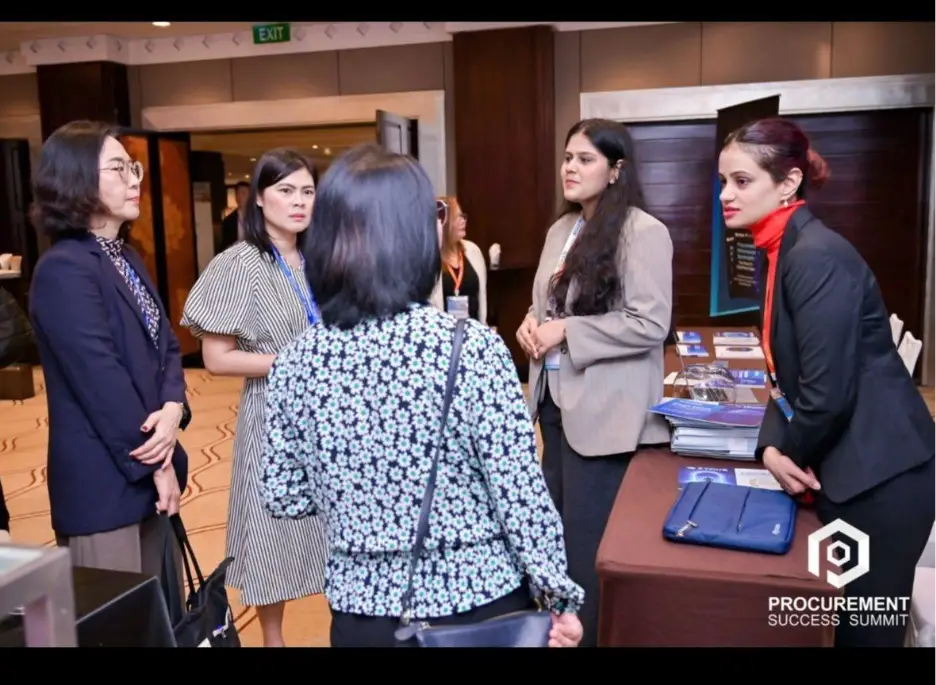
What I Demonstrated:
Merlin’s Intake-to-Outcome Orchestration: Conversational AI guides stakeholders through compliant procurement naturally—like an expert colleague available 24/7. This reduces intake processing time by 70%.
Autonomous Negotiation Agents (ANA): For tail spend, ANA:
- Receives requisitions and identifies pre-qualified suppliers
- Negotiates simultaneously with multiple vendors
- Optimizes contract terms based on policies and benchmarks
- Executes purchase orders autonomously when conditions meet thresholds
Measurable Impact: Organizations deploying ANA report 2-5% tail spend savings—not because humans negotiated poorly, but because they lacked capacity to negotiate 2,000 transactions monthly with rigor.
Accuracy Through Intelligence: Merlin eliminates errors:
- Incorrect supplier selection (AI cross-references qualification and performance)
- Policy violations (automated enforcement)
- Delayed approvals (intelligent routing)
Her response: “You’re giving us capacity to do work we’re supposed to be doing, but can’t, because we’re overwhelmed.”
Why These Conversations Matter: Designed vs. Adapted
These three conversations weren’t isolated requests. They represent a structural challenge dominating APAC procurement: Procurement’s strategic elevation has outpaced its operational capacity.
What emerged clearly from PSS Bangkok discussions is the critical distinction between platforms designed for autonomy from inception versus those adapted for it afterward. This architectural difference determines whether platforms deliver true transformation or incremental improvement.
Leadership frameworks now reward:
- AI-native architecture (designed for autonomy, not bolt-on features)
- End-to-end intelligence across workflows
- Measurable outcomes beyond cost savings
- Supplier Value Management at scale
- Autonomous decision support (systems that act, not just inform)
As one executive observed during our presentation discussion: “Your analyst recognition tells me you’ve been building for this moment. We need partners who saw this coming, not vendors trying to catch up.”
The Regional Imperative: Why APAC Can’t Afford Slow Adoption
Thailand’s urgency reflects broader APAC realities:
Supply Chain Complexity: APAC organizations manage suppliers across 10+ countries with different languages, regulations, and practices. This exponentially increases compliance risk and strategic uncertainty.
Regulatory Fragmentation: Unlike the EU’s harmonized framework, APAC teams navigate China’s regulations, India’s GST, ASEAN trade agreements, and individual country ESG standards simultaneously.
Talent Constraints: The APAC supply chain management market is valued at USD 38 billion and growing rapidly, but talent isn’t scaling proportionally. Organizations must deliver more value with flat team sizes.
“We can’t hire our way out of this,” one director stated during the panel discussion. “The talent doesn’t exist at scale. We need technology that multiplies capability.”
Quantifying the Opportunity
The business case for Agentic AI in APAC procurement is measurable today:
For Individual Organizations:
- 40-60% of routine tasks are ready for intelligent automation
- 2-5% immediate savings in tail spend through ANA
- 70% faster requisition processing through AI-guided intake
- Up to 35% reduction in supplier risk through predictive analytics
- 15-20% resource reallocation from transactional to strategic work
For APAC Region:
- USD 35 billion projected market for digitalized procurement by 2030
- 14% CAGR for procurement technology adoption
- 94% of manufacturers planning AI/ML investments within five years
- 62% AI adoption in Thailand—highest in Southeast Asia
Organizations moving first aren’t just capturing benefits ahead of competitors—they’re establishing operational capabilities that slower adopters will struggle to match.
Three Predictions for APAC Procurement’s Next 24 Months
Prediction 1: Thailand Will Lead ASEAN in Procurement AI Deployment Velocity
Thailand’s 62% AI adoption rate, manufacturing sophistication, and leadership openness create ideal conditions. Within 18 months, Thailand’s leading enterprises will have deployed autonomous agents across tail spend, contract intelligence, and supplier risk, establishing regional benchmarks.
Prediction 2: The “Compliance-Cost Trade-off” Will Disappear
Today, leaders treat cost optimization and compliance as competing priorities. Agentic AI eliminates this by handling both simultaneously. By late 2027, leading organizations will expect both, platforms unable to deliver will be obsolete.
Prediction 3: Procurement Talent Will Shift from “Doing” to “Directing”
From: Processing requisitions, comparing quotes, tracking deliveries, chasing approvals
To: Setting strategic priorities, evaluating partnerships, negotiating enterprise agreements, assessing geopolitical risks
This isn’t elimination, it’s elevation. Organizations recognizing this will attract and retain top talent.
The Bottom Line
PSS Bangkok 2026 proved that procurement’s transformation from transactional function to strategic orchestrator is happening now, and organizations moving fastest are gaining advantages competitors will struggle to overcome.
The conversations weren’t about “should we adopt AI?” but “how quickly can we deploy autonomous agents solving problems costing millions today?”
Thailand’s acceleration as an APAC procurement innovation hub is being earned by leaders willing to move from automation to autonomy, and who recognize the difference between platforms designed for autonomous intelligence and those adapted for it.
The convergence across Gartner, Forrester, and IDC validates what Bangkok’s leaders understand: being designed for autonomy, not adapted for it, determines which platforms deliver true procurement transformation versus incremental improvement.
As one executive summarized during our closing conversation: “Five years ago, we asked if technology could help. Three years ago, which technology. Today, how fast we can deploy it before competitors do. That shift tells you everything.”
The question isn’t whether Agentic AI will transform procurement. It’s whether your organization will lead it, follow it, or be disrupted by it.
Ready to Explore How Agentic AI Solves Your Specific Procurement Challenges?
The leaders I met in Bangkok needed a partner who understands APAC’s complexity and delivers measurable results fast.
If PSS Bangkok’s challenges resonate, cost-compliance optimization, tail spend leakage, capacity constraints, or dual-system frustrations, let’s talk.
Connect with our team to discover how Merlin’s Agentic AI platform and Autonomous Negotiation Agents address your specific context across Thai operations, ASEAN supply chains, or pan-APAC procurement functions.
Related Reads: