






TL;DR
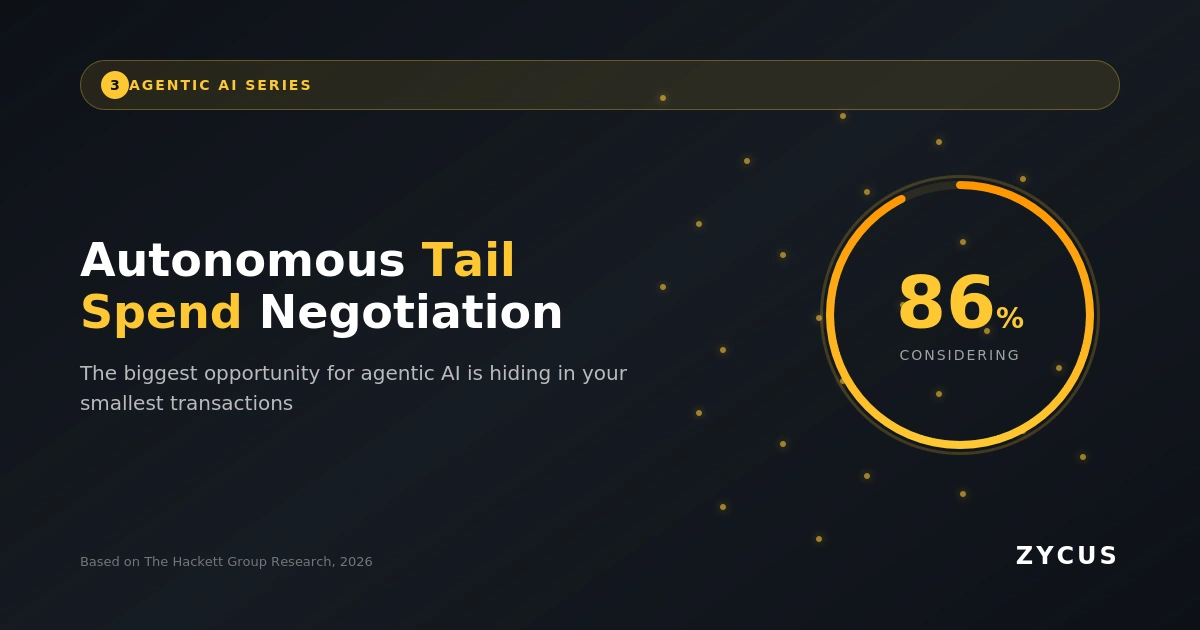
- 86% of procurement leaders are likely to consider AI agents for tail spend management.
- Yet only 36% are satisfied with current tail spend approaches — the largest satisfaction gap in procurement.
- Autonomous negotiation for low-value, low-risk transactions is the ideal proving ground for agentic AI.
- Expected improvements of 2-5% on tail spend can translate to significant savings at scale.
- Success requires defining clear negotiation parameters: price, compliance, and supplier reliability.
Here’s a paradox every CPO knows but rarely admits: the spend categories that consume the most procurement time often deliver the least strategic value.
Tail spend — those thousands of low-value transactions scattered across hundreds of suppliers — represents 20% of most organizations’ procurement volume but can account for up to 80% of supplier relationships. It’s the long tail that never gets managed, only processed.
The Hackett Group’s 2026 research reveals something interesting: 86% of procurement leaders are likely to consider AI agents for tail spend. That’s the highest consideration rate for any agentic AI use case in procurement. And it makes perfect sense.
Why Tail Spend is the Ideal Starting Point
The logic is elegant. Tail spend transactions share three characteristics that make them perfect for autonomous AI:
Low individual value. When a single transaction is worth $500, the risk of an AI making a suboptimal decision is bounded. Even a 10% miss on a tail spend purchase is a $50 problem, not a strategic crisis.
High volume. What humans can’t do economically — negotiate every small purchase — AI can do at scale. An autonomous agent doesn’t fatigue after the 500th supplier conversation.
Clear parameters. Tail spend negotiations typically focus on straightforward variables: price, delivery time, and compliance. Unlike strategic sourcing, there’s less ambiguity about what “good” looks like.
Tail Spend Management: Current State vs. AI Potential
| Metric | Finding |
| Leaders considering AI for tail spend | 86% |
| Current satisfaction with tail spend management | 36% |
| Satisfaction gap (highest in procurement) | 50 pts |
| Expected improvement from autonomous negotiation | 2-5% |
Source: The Hackett Group Agentic AI in Procurement Adoption Index – 2026
The 36% Satisfaction Problem
Only 36% of procurement leaders are satisfied with their current tail spend management. That’s the lowest satisfaction rate across all procurement processes measured by Hackett.
The reasons are structural, not operational. Traditional procurement wasn’t designed for tail spend. Category managers can’t justify the time to negotiate a $2,000 office supply contract when they’re responsible for $50 million in strategic spend. So tail spend gets ignored, purchased off-contract, or routed through inefficient approval chains.
This is exactly the gap autonomous agents can fill. Not by replacing strategic procurement, but by doing the work that never made economic sense for humans to do.
What Autonomous Tail Spend Negotiation Looks Like
When we say “autonomous negotiation,” we’re not describing science fiction. Today’s implementations focus on well-defined scenarios:
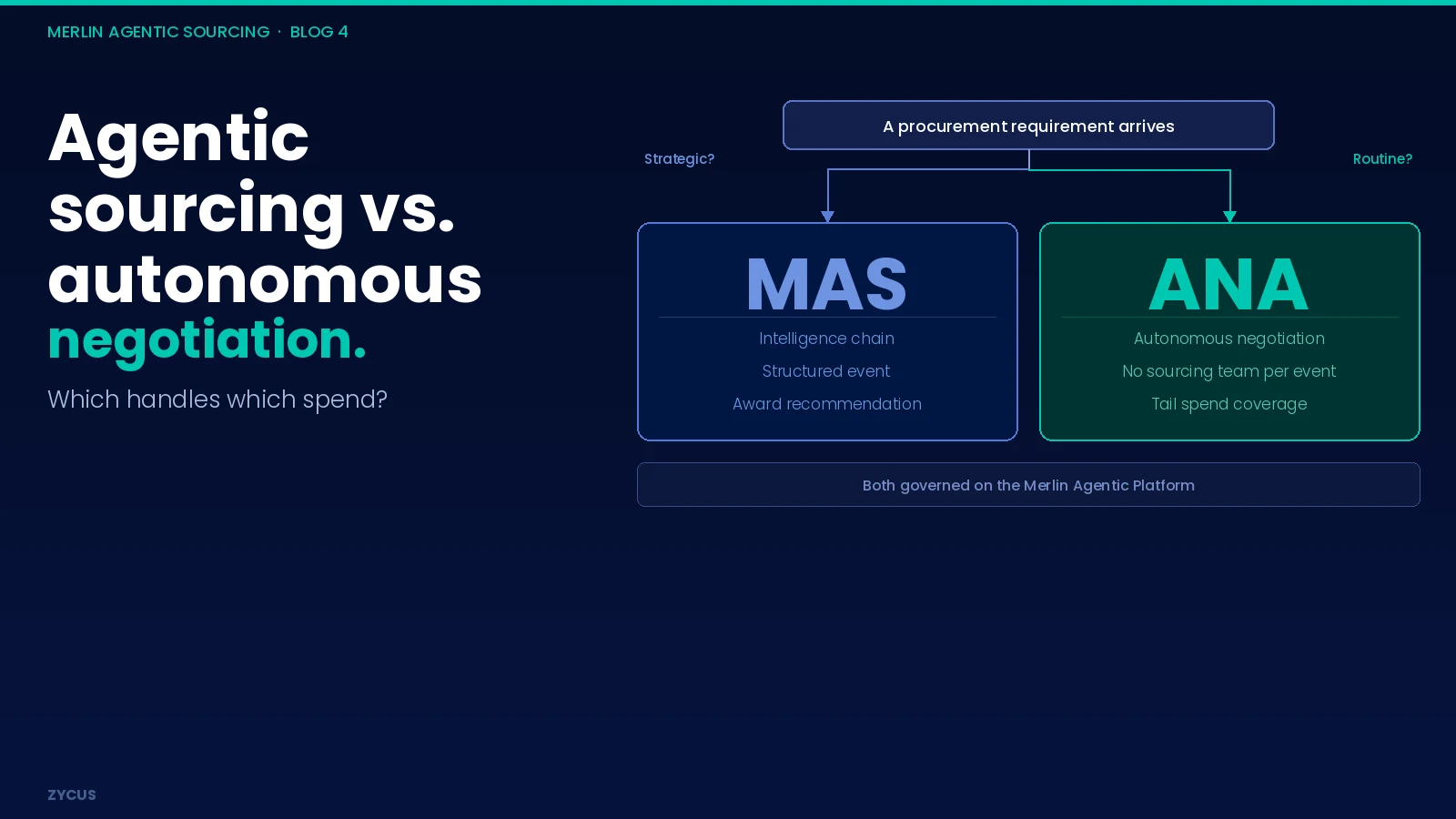
The AI agent receives a purchase request for a commodity item. It checks the organization’s preferred suppliers, identifies competitive alternatives, and initiates pricing discussions — all within pre-approved parameters. If a supplier offers terms within the acceptable range, the agent completes the transaction. If negotiations stall or terms fall outside parameters, it escalates to human review.
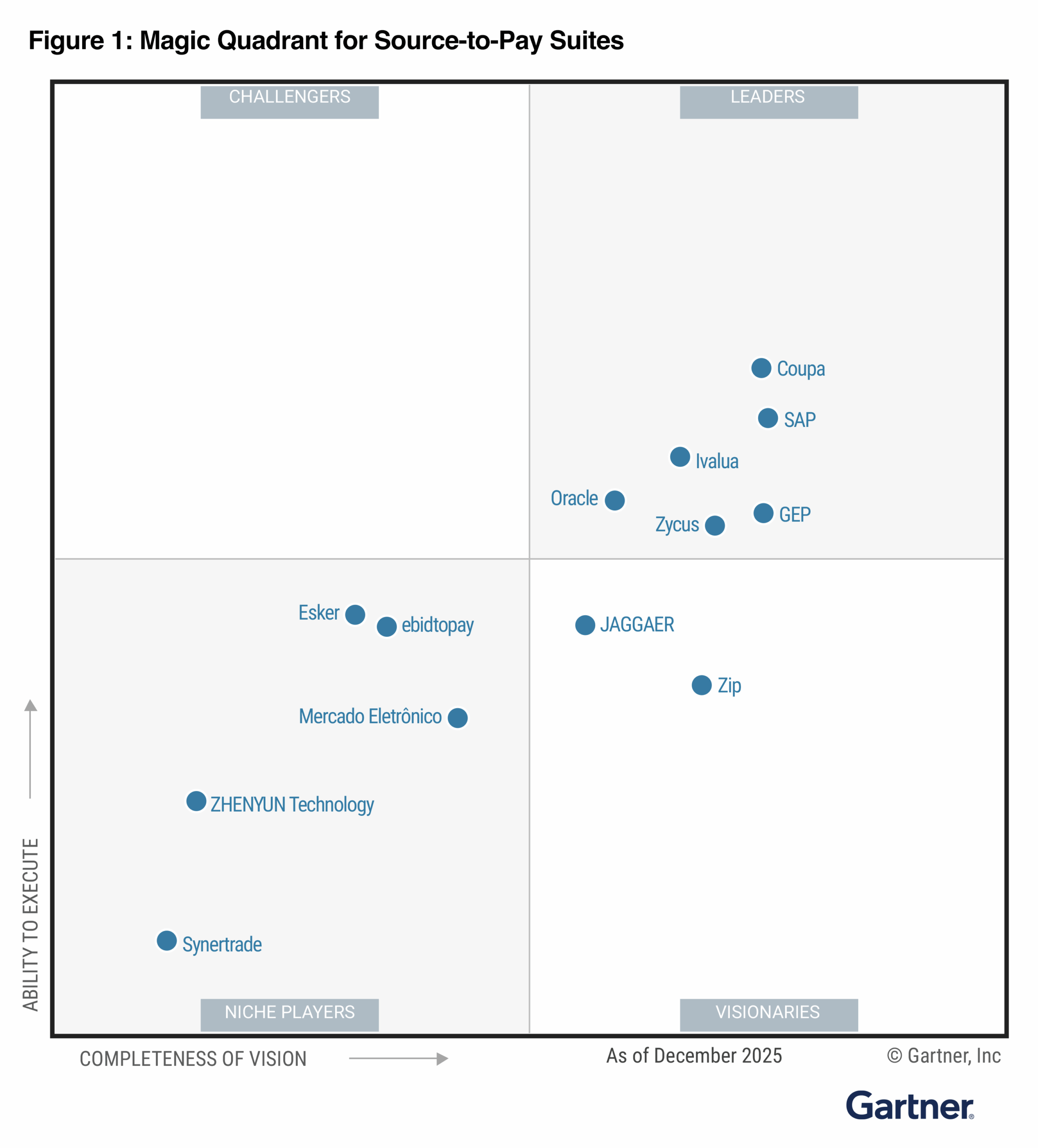
Zycus — recognized as a Leader in the 2026 Gartner® Magic Quadrant™ for Source-to-Pay Suites — has specifically invested in agentic AI for tail spend management through autonomous negotiation, turning this theoretical capability into production reality.
The key parameters organizations typically define include maximum price thresholds, approved supplier tiers, compliance requirements, and delivery timeframes. Within these guardrails, the agent operates autonomously (Contract Management and Agentic AI: High Returns, High Risk — How to Navigate Both).
Getting Started: Three Practical Steps
- Define your tail spend threshold. What transaction value qualifies for autonomous handling? Most organizations start with purchases under $5,000-$10,000.
- Establish negotiation boundaries. What’s the acceptable price range? Which compliance requirements are non-negotiable? How should the agent handle supplier pushback?
- Start with a single category. Office supplies, MRO items, or IT peripherals are common starting points. Prove value in one area before expanding.
The 86% considering this approach understand something important: tail spend is where agentic AI can prove itself without risking strategic relationships. It’s the training ground for procurement’s autonomous future.
FAQs
Q1. What is autonomous tail spend negotiation?
It’s the use of AI agents to independently negotiate pricing, terms, and conditions for low-value, high-volume transactions without human intervention, operating within pre-defined parameters and escalating exceptions when needed.
Q2. Why is tail spend the ideal use case for agentic AI in procurement?
Tail spend combines low individual risk, high volume, and clear negotiation parameters — creating an environment where AI can operate autonomously without strategic consequences, while delivering measurable savings at scale.
Q3. What improvements can organizations expect from autonomous tail spend management?
Research indicates 2-5% improvement on tail spend through autonomous negotiation. For organizations with significant tail spend volumes, this translates to substantial absolute savings while freeing procurement resources for strategic work.
|
Next in This Series Contract Management and Agentic AI: High Returns, High Risk — How to Navigate Both Why contracts appear in both the top 5 return areas and top 5 risk areas for agentic AI in procurement. |
Related Reads:
- Guide to Tail Spend Analysis: What it is and Why it Matters
- Tail Spend Management Solution | Zycus + IBM
- Navigating Efficiency with Tail Spend Management Solutions
- 5 Key Benefits of Automating Tail Spend Management
- Tail Spend vs. Tactical Spend vs. Maverick Spend: Clearing the Confusion in Procurement
- Tail Spend Optimization through GenAI Automation | Download Whitepaper